
Availability:
Not yet published
- Edition: New Edition
- Pages: 176
- Book Size: 6.00 x 9.00
- ISBN-13: 9798888504543
- Imprint: Inner Traditions
- On Sale Date: October 6, 2026
- Format: Paperback Book
- Illustrations: 43 b&w illustrations
A practical introduction to the history, principles, and tradition of sacred geometry
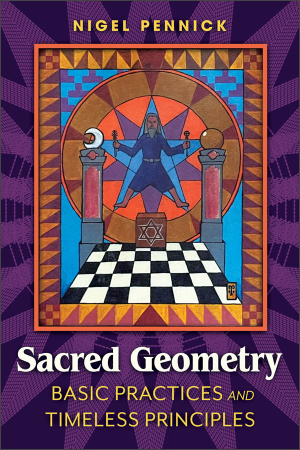
Nigel Pennick introduces sacred geometry as a universal language that links the cosmos, temples, and symbols. Tracing its history from ancient Egypt and Mesopotamia to Renaissance science and modern design, he explains core forms, ratios, and constructions, then offers practical methods for crafting sigils, amulets, and harmonious spaces grounded in geometric proportion and spiritual meaning.
Nigel Pennick introduces sacred geometry as a universal language that links the cosmos, temples, and symbols. Tracing its history from ancient Egypt and Mesopotamia to Renaissance science and modern design, he explains core forms, ratios, and constructions, then offers practical methods for crafting sigils, amulets, and harmonious spaces grounded in geometric proportion and spiritual meaning.

• Traces the origins and core concepts of sacred geometry from ancient Egypt, Mesopotamia, and Britain through the Renaissance and modern science
• Reveals how geometric forms, proportions, and measurements shape sacred architecture, ritual objects, and esoteric symbolism
• Applies foundational principles such as the Golden Section, Platonic solids, and ad quadratum methods to understand the connection between spiritual practice and cosmic order
Sacred geometry is a universal language that links the structure of the cosmos, sacred sites, and spiritual symbolism. Nigel Pennick introduces the basic principles and esoteric secrets of this ancient tradition.
Pennick explores how sacred geometry shaped temples, pyramids, ziggurats, and cathedrals, showing how builders encoded metaphysical knowledge into architecture and ritual objects. He shares accounts of sacred geometry in Ancient Egypt, Mesopotamia, Israel, and Greece, as well as its influence on Medieval and Renaissance architecture, Freemasonry, and Baroque city planning. You will learn practical ways to apply this knowledge by crafting geometric sigils and amulets, and how to use proportional systems for harmonious design.
By connecting ancient traditions with modern discoveries, the author shows how sacred geometry remains a foundation for meaningful architecture and spiritual understanding. In addition, Pennick provides you with tools to integrate sacred geometry into your personal, spiritual, and creative practices.
This concise guide to basic practices and timeless principles reveals the enduring significance of sacred geometry as a bridge between the material and the spiritual worlds.
• Reveals how geometric forms, proportions, and measurements shape sacred architecture, ritual objects, and esoteric symbolism
• Applies foundational principles such as the Golden Section, Platonic solids, and ad quadratum methods to understand the connection between spiritual practice and cosmic order
Sacred geometry is a universal language that links the structure of the cosmos, sacred sites, and spiritual symbolism. Nigel Pennick introduces the basic principles and esoteric secrets of this ancient tradition.
Pennick explores how sacred geometry shaped temples, pyramids, ziggurats, and cathedrals, showing how builders encoded metaphysical knowledge into architecture and ritual objects. He shares accounts of sacred geometry in Ancient Egypt, Mesopotamia, Israel, and Greece, as well as its influence on Medieval and Renaissance architecture, Freemasonry, and Baroque city planning. You will learn practical ways to apply this knowledge by crafting geometric sigils and amulets, and how to use proportional systems for harmonious design.
By connecting ancient traditions with modern discoveries, the author shows how sacred geometry remains a foundation for meaningful architecture and spiritual understanding. In addition, Pennick provides you with tools to integrate sacred geometry into your personal, spiritual, and creative practices.
This concise guide to basic practices and timeless principles reveals the enduring significance of sacred geometry as a bridge between the material and the spiritual worlds.
Nigel Pennick is an authority on ancient belief systems, traditions, runes, and geomancy and has lectured extensively in Europe and the United States. He is the author and illustrator of more than 60 books, including The Pagan Book of Days and The Ancestral Power of Amulets, Talismans, and Mascots. He lives near Cambridge, England.