

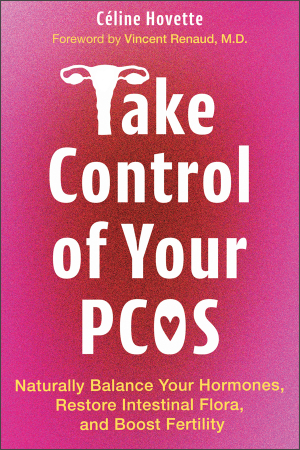
Take Control of Your PCOS
Naturally Balance Your Hormones, Restore Intestinal Flora, and Boost Fertility
By (Author) Céline Hovette
Foreword by Vincent Renaud, MD
Availability:
Not yet published
- Pages: 224
- Book Size: 6.00 x 9.00
- ISBN-13: 9798888503706
- Imprint: Healing Arts Press
- On Sale Date: August 25, 2026
- Format: Paperback Book
- Illustrations: 44 color illustrations
A holistic guide to managing Polycystic Ovary Syndrome (PCOS)
Céline Hovette offers a comprehensive, holistic approach to understanding and managing PCOS. She explains how diet, lifestyle, and environmental factors contribute to hormonal imbalance and provides practical guidance for restoring fertility, rebalancing the microbiome, and managing symptoms. Learn to use micronutrients, probiotics, herbal therapies, and essential oils for lasting hormonal health and well-being.
Céline Hovette offers a comprehensive, holistic approach to understanding and managing PCOS. She explains how diet, lifestyle, and environmental factors contribute to hormonal imbalance and provides practical guidance for restoring fertility, rebalancing the microbiome, and managing symptoms. Learn to use micronutrients, probiotics, herbal therapies, and essential oils for lasting hormonal health and well-being.

• Explores what PCOS is and how our modern lifestyle contributes to hormonal imbalance
• Shows how to rebalance your diet to lose stubborn weight and restore fertility, support your microbiome to rebuild healthy digestion, and avoid exposure to toxins and endocrine disruptors
• Provides practical guidance on managing PCOS symptoms with micronutrients, probiotics, herbal therapies, essential oils, and exercise
Affecting one out of every ten women, polycystic ovary syndrome, or PCOS, is poorly understood by modern allopathic medicine and often misdiagnosed. Many women are simply told to lose weight, take birth control pills, or, in the case of PCOS-related infertility, pursue expensive medical procedures in order to conceive.
In this easy-to-understand guide, Céline Hovette explores what PCOS is, how hormones work, and how our modern lifestyles contribute to hormonal imbalance. She examines the detrimental effects of toxins and endocrine disruptors as well as the impact of high stress and poor diets. The author considers the full spectrum of PCOS symptoms—including adult acne, thinning hair, anger, depression, infertility, excess weight, and chronic mood swings. She also demonstrates how these symptoms develop throughout a woman’s lifetime.
Hovette’s comprehensive and holistic approach to PCOS offers practical guidance on how you can manage symptoms, stress, and menstrual cycle disorders as well as address fertility issues with micronutrients, probiotics, herbs, essential oils, and exercise.
• Shows how to rebalance your diet to lose stubborn weight and restore fertility, support your microbiome to rebuild healthy digestion, and avoid exposure to toxins and endocrine disruptors
• Provides practical guidance on managing PCOS symptoms with micronutrients, probiotics, herbal therapies, essential oils, and exercise
Affecting one out of every ten women, polycystic ovary syndrome, or PCOS, is poorly understood by modern allopathic medicine and often misdiagnosed. Many women are simply told to lose weight, take birth control pills, or, in the case of PCOS-related infertility, pursue expensive medical procedures in order to conceive.
In this easy-to-understand guide, Céline Hovette explores what PCOS is, how hormones work, and how our modern lifestyles contribute to hormonal imbalance. She examines the detrimental effects of toxins and endocrine disruptors as well as the impact of high stress and poor diets. The author considers the full spectrum of PCOS symptoms—including adult acne, thinning hair, anger, depression, infertility, excess weight, and chronic mood swings. She also demonstrates how these symptoms develop throughout a woman’s lifetime.
Hovette’s comprehensive and holistic approach to PCOS offers practical guidance on how you can manage symptoms, stress, and menstrual cycle disorders as well as address fertility issues with micronutrients, probiotics, herbs, essential oils, and exercise.
Introduction
“I was diagnosed with PCOS five years ago. My gynecologist told me that there was nothing that could be done about it aside from taking the pill.”
“I have PCOS, but I don’t really know what it is. Nobody can clearly explain to me what this syndrome is or what its consequences are.”
“My physician told me I had to lose weight to relieve my symptoms. But despite all my efforts, I was not able to do so.”
“I have read that there is a revolutionary food supplement for treating PCOS. What do you think of it?”
These remarks are what I hear most often during my office visits from the women I see because of my work dedicated to PCOS. PCOS, what’s that? PCOS is an acronym for polycystic ovary syndrome. This somewhat inelegant name tells us very little and yet, just like endometriosis, another frequently overlooked women’s health disorder, this syndrome affects 10 percent of women. According to Professor Michel Pugeat, endocrinologist and expert on PCOS, this figure is most likely highly underestimated. He estimates that the actual figure is closer to 15 to 20 percent of the female population (see Favier, “Le syndrome des ovaires polykystiques”). Despite this significant proportion, this syndrome is still poorly understood, poorly diagnosed, and poorly explained to the women living with it.
•
PCOS affects 1 out of every 10 women.
As a hormone health coach specializing in hormonal balance and female well-being, I have noticed that the requests for appointments on this subject have been increasing. The reason why I ended up working with so many women living with PCOS is that they have often confessed to me their distress coping with living with this condition, that they barely understand it and they haven’t been told a whole lot. All they know is that there is nothing that can be done to cure it and the only “treatment” is the contraceptive pill.
These women often feel lost because of the variety of symptoms they have to deal with. There are many symptoms; close to fifty. The symptoms vary from woman to woman, which explains why diagnosing it can sometimes take several years. Some of them experience physical problems such as overweight, acne, excessive hairiness, or hair loss, and they can also suffer from an irregular menstrual cycle and an absence of libido. This not only affects the image they have of their bodies but also their confidence in themselves and in their relationships. Many express frustration at the lack of guidance from their physician or gynecologist, many of whom may not even view PCOS as a true disease. In fact, as indicated by its name, PCOS is classified as a syndrome, which differs from a disease or condition: A disease refers to a disorder with a specific, identifiable cause, a syndrome describes a collection of symptoms that tend to occur together without a single known origin, and a condition is a broader term encompassing any state of health that affects the body but may not meet the criteria of a disease. Because these women’s lives aren’t at risk, they are most often advised to lose weight (if only it was that easy—we’ll revisit this) or to make an appointment when they want to find out whether the time is right to conceive.
Many of these women find themselves with a diagnosis confirming that they are indeed suffering from PCOS. Faced with this void, they may spend hours online looking for information and a “miracle” cure. It is tempting to think that a diet supplement or herbal tea could help overcome this syndrome, but beware of false promises.
I do not have PCOS myself but hearing these women’s stories has touched me deeply. Over the course of my many consultations, I have seen that many refuse to accept the condition as inevitable—and they are absolutely right.
Naturopathy and many other natural approaches can provide valuable support to the women living with this syndrome.
In their “Benchmarks for Training,” the World Health Organization (WHO) defines naturopathy as “an amalgamation of the philosophy, techniques, science and principles that typified the alternative healing systems of the eighteenth and nineteenth centuries, particularly those related to vitalism. These alternative approaches tended to focus both on health promotion and on health-care regimes that supported the patient’s innate healing processes.”
Put simply, naturopathy is the art of maintaining good health and achieving one’s full potential of vitality and well-being. To do this, naturopathy relies on a variety of tools:
• diet and micronutrition
• use of plants, whether in the form of teas, dietary supplements, essential oils (aromatherapy), or buds (gemmotherapy)
• stress management and complementary techniques like cardiac coherence, sophrology, and meditation
• emotional management using floral essences
• movement and physical exercise
The goal of the naturopathic practitioner is to educate patients about overall health and well- being, and to develop methods that allow each individual to live well. This is where naturopathy can be especially helpful to those with PCOS—as a complement to a conventional medicine approach. While medical treatments may relieve certain symptoms, working on the “terrain,” establishing long-term healthy habits, and optimizing all factors that support hormonal balance, should be the first step.
•
Naturopathy and many other natural techniques can give valuable support to women living with this condition.
The purpose of this book is not to replace any form of medical treatment. I intend to speak to all women living with this syndrome who are looking for answers and want to take control of their own health. This book is also designed to support health practitioners who care about their patients’ well-being and wish to learn more about PCOS and want to help guide their patients toward a holistic approach.
To be effective in treating PCOS, it is first necessary to understand this hormonal imbalance and how it works. In the first part of the book, I will review fundamentals of female hormonal balance and the menstrual cycle—an essential prerequisite for understanding PCOS. We will then examine the syndrome itself: its causes, effects, diagnostic process, and clinical examinations, as well as its consequences at different stages of a woman’s life.
The second part of the book will present natural solutions, including diet and micronutrition, support for menstrual cycle disorders, stress and emotion management, physical activity, and overall healthy lifestyle habits.
I hope that this guide will allow you to get a better understanding of PCOS and bring you new perspectives for managing it.
“I was diagnosed with PCOS five years ago. My gynecologist told me that there was nothing that could be done about it aside from taking the pill.”
“I have PCOS, but I don’t really know what it is. Nobody can clearly explain to me what this syndrome is or what its consequences are.”
“My physician told me I had to lose weight to relieve my symptoms. But despite all my efforts, I was not able to do so.”
“I have read that there is a revolutionary food supplement for treating PCOS. What do you think of it?”
These remarks are what I hear most often during my office visits from the women I see because of my work dedicated to PCOS. PCOS, what’s that? PCOS is an acronym for polycystic ovary syndrome. This somewhat inelegant name tells us very little and yet, just like endometriosis, another frequently overlooked women’s health disorder, this syndrome affects 10 percent of women. According to Professor Michel Pugeat, endocrinologist and expert on PCOS, this figure is most likely highly underestimated. He estimates that the actual figure is closer to 15 to 20 percent of the female population (see Favier, “Le syndrome des ovaires polykystiques”). Despite this significant proportion, this syndrome is still poorly understood, poorly diagnosed, and poorly explained to the women living with it.
•
PCOS affects 1 out of every 10 women.
As a hormone health coach specializing in hormonal balance and female well-being, I have noticed that the requests for appointments on this subject have been increasing. The reason why I ended up working with so many women living with PCOS is that they have often confessed to me their distress coping with living with this condition, that they barely understand it and they haven’t been told a whole lot. All they know is that there is nothing that can be done to cure it and the only “treatment” is the contraceptive pill.
These women often feel lost because of the variety of symptoms they have to deal with. There are many symptoms; close to fifty. The symptoms vary from woman to woman, which explains why diagnosing it can sometimes take several years. Some of them experience physical problems such as overweight, acne, excessive hairiness, or hair loss, and they can also suffer from an irregular menstrual cycle and an absence of libido. This not only affects the image they have of their bodies but also their confidence in themselves and in their relationships. Many express frustration at the lack of guidance from their physician or gynecologist, many of whom may not even view PCOS as a true disease. In fact, as indicated by its name, PCOS is classified as a syndrome, which differs from a disease or condition: A disease refers to a disorder with a specific, identifiable cause, a syndrome describes a collection of symptoms that tend to occur together without a single known origin, and a condition is a broader term encompassing any state of health that affects the body but may not meet the criteria of a disease. Because these women’s lives aren’t at risk, they are most often advised to lose weight (if only it was that easy—we’ll revisit this) or to make an appointment when they want to find out whether the time is right to conceive.
Many of these women find themselves with a diagnosis confirming that they are indeed suffering from PCOS. Faced with this void, they may spend hours online looking for information and a “miracle” cure. It is tempting to think that a diet supplement or herbal tea could help overcome this syndrome, but beware of false promises.
I do not have PCOS myself but hearing these women’s stories has touched me deeply. Over the course of my many consultations, I have seen that many refuse to accept the condition as inevitable—and they are absolutely right.
Naturopathy and many other natural approaches can provide valuable support to the women living with this syndrome.
In their “Benchmarks for Training,” the World Health Organization (WHO) defines naturopathy as “an amalgamation of the philosophy, techniques, science and principles that typified the alternative healing systems of the eighteenth and nineteenth centuries, particularly those related to vitalism. These alternative approaches tended to focus both on health promotion and on health-care regimes that supported the patient’s innate healing processes.”
Put simply, naturopathy is the art of maintaining good health and achieving one’s full potential of vitality and well-being. To do this, naturopathy relies on a variety of tools:
• diet and micronutrition
• use of plants, whether in the form of teas, dietary supplements, essential oils (aromatherapy), or buds (gemmotherapy)
• stress management and complementary techniques like cardiac coherence, sophrology, and meditation
• emotional management using floral essences
• movement and physical exercise
The goal of the naturopathic practitioner is to educate patients about overall health and well- being, and to develop methods that allow each individual to live well. This is where naturopathy can be especially helpful to those with PCOS—as a complement to a conventional medicine approach. While medical treatments may relieve certain symptoms, working on the “terrain,” establishing long-term healthy habits, and optimizing all factors that support hormonal balance, should be the first step.
•
Naturopathy and many other natural techniques can give valuable support to women living with this condition.
The purpose of this book is not to replace any form of medical treatment. I intend to speak to all women living with this syndrome who are looking for answers and want to take control of their own health. This book is also designed to support health practitioners who care about their patients’ well-being and wish to learn more about PCOS and want to help guide their patients toward a holistic approach.
To be effective in treating PCOS, it is first necessary to understand this hormonal imbalance and how it works. In the first part of the book, I will review fundamentals of female hormonal balance and the menstrual cycle—an essential prerequisite for understanding PCOS. We will then examine the syndrome itself: its causes, effects, diagnostic process, and clinical examinations, as well as its consequences at different stages of a woman’s life.
The second part of the book will present natural solutions, including diet and micronutrition, support for menstrual cycle disorders, stress and emotion management, physical activity, and overall healthy lifestyle habits.
I hope that this guide will allow you to get a better understanding of PCOS and bring you new perspectives for managing it.
Foreword by Vincent Renaud, MD
Introduction
PART 1
PCOS: What You Need to Know
1 Understanding Hormones and the
Menstrual Cycle
2 What Is PCOS?
3 PCOS During the Different Stages of
a Woman’s Life
4 PCOS and Body Image
PART 2
Living Better with PCOS
5 Rebalancing Your Diet
6 Understanding the Gut and Its Microbiome
7 Taking Supplements
8 Taking Action Against the Disorders that
Affect the Menstrual Cycle
9 Dealing with Stress and Emotions
10 Avoiding Exposure to Endocrine Disruptors
11 Engaging in Physical Activity
Conclusion
Acknowledgments
Appendix: Responses to My Patients’
Primary Objections
Glossary
Bibliography
Index
Introduction
PART 1
PCOS: What You Need to Know
1 Understanding Hormones and the
Menstrual Cycle
2 What Is PCOS?
3 PCOS During the Different Stages of
a Woman’s Life
4 PCOS and Body Image
PART 2
Living Better with PCOS
5 Rebalancing Your Diet
6 Understanding the Gut and Its Microbiome
7 Taking Supplements
8 Taking Action Against the Disorders that
Affect the Menstrual Cycle
9 Dealing with Stress and Emotions
10 Avoiding Exposure to Endocrine Disruptors
11 Engaging in Physical Activity
Conclusion
Acknowledgments
Appendix: Responses to My Patients’
Primary Objections
Glossary
Bibliography
Index
Céline Hovette is a Hormone Health Coach (IIN) and Women’s Integrative & Functional Medicine Certified Educator (WIMI-CE), guiding women with a holistic, science-based approach to hormonal balance and overall well-being. She trained with Dr. Aviva Romm. Céline Hovette lives in Northern France.
“Céline Hovette offers a remarkably thorough and clear description of PCOS and its causes as well as an extensive list of natural means—diets, herbal remedies, vitamin and mineral supplements, and more—to address this ailment by acting not only on the symptoms but, above all, on the underlying causes.” Christopher Vasey, ND, author of The Acid-Alkaline Diet for Optimum Health, The Naturopathic Way, The Water Prescription, and The Detox Mono Diet
HOLISTIC HEALTH / WOMEN’S HEALTH / PCOS
"Céline Hovette offers a remarkably thorough and clear description of PCOS and its causes as well as an extensive list of natural means—diets, herbal remedies, vitamin and mineral supplements, and more—to address this ailment by acting not only on the symptoms but, above all, on the underlying causes."
–Christopher Vasey, ND, author of The Acid-Alkaline Diet for Optimum Health, The Naturopathic Way, The Water Prescription, and The Detox Mono Diet
Affecting one out of every ten women, polycystic ovary syndrome, or PCOS, is poorly understood by modern allopathic medicine and often misdiagnosed. Many women are simply told to lose weight, take birth control pills, or, in the case of PCOS-related infertility, pursue expensive medical procedures in order to conceive.
In this easy-to-understand guide, Céline Hovette explores what PCOS is, how hormones work, and how our modern lifestyles contribute to hormonal imbalance. She examines the detrimental effects of toxins and endocrine disruptors as well as the impact of high stress and poor diets. The author considers the full spectrum of PCOS symptoms—including adult acne, thinning hair, anger, depression, infertility, excess weight, and chronic mood swings. She also demonstrates how these symptoms develop throughout a woman’s lifetime.
Hovette’s comprehensive and holistic approach to PCOS offers practical guidance on how you can manage symptoms, stress, and menstrual cycle disorders as well as address fertility issues with micronutrients, probiotics, herbs, essential oils, and exercise.
Céline Hovette is a Hormone Health Coach (IIN) and Women’s Integrative & Functional Medicine Certified Educator (WIMI-CE), guiding women with a holistic, science-based approach to hormonal balance and overall well-being. She trained with Dr. Aviva Romm. Céline Hovette lives in Northern France.
"Céline Hovette offers a remarkably thorough and clear description of PCOS and its causes as well as an extensive list of natural means—diets, herbal remedies, vitamin and mineral supplements, and more—to address this ailment by acting not only on the symptoms but, above all, on the underlying causes."
–Christopher Vasey, ND, author of The Acid-Alkaline Diet for Optimum Health, The Naturopathic Way, The Water Prescription, and The Detox Mono Diet
Affecting one out of every ten women, polycystic ovary syndrome, or PCOS, is poorly understood by modern allopathic medicine and often misdiagnosed. Many women are simply told to lose weight, take birth control pills, or, in the case of PCOS-related infertility, pursue expensive medical procedures in order to conceive.
In this easy-to-understand guide, Céline Hovette explores what PCOS is, how hormones work, and how our modern lifestyles contribute to hormonal imbalance. She examines the detrimental effects of toxins and endocrine disruptors as well as the impact of high stress and poor diets. The author considers the full spectrum of PCOS symptoms—including adult acne, thinning hair, anger, depression, infertility, excess weight, and chronic mood swings. She also demonstrates how these symptoms develop throughout a woman’s lifetime.
Hovette’s comprehensive and holistic approach to PCOS offers practical guidance on how you can manage symptoms, stress, and menstrual cycle disorders as well as address fertility issues with micronutrients, probiotics, herbs, essential oils, and exercise.
Céline Hovette is a Hormone Health Coach (IIN) and Women’s Integrative & Functional Medicine Certified Educator (WIMI-CE), guiding women with a holistic, science-based approach to hormonal balance and overall well-being. She trained with Dr. Aviva Romm. Céline Hovette lives in Northern France.
ADHD
$16.99
Adaptogens
$24.99
save
$10.50
The Encyclopedia of Ailments and Diseases
Special Price
$24.49
Regular Price
$34.99