

My Altered States
by Rick Strassman, M.D. author of My Altered States, DMT: The Spirit Molecule, and DMT and the Soul of Prophecy
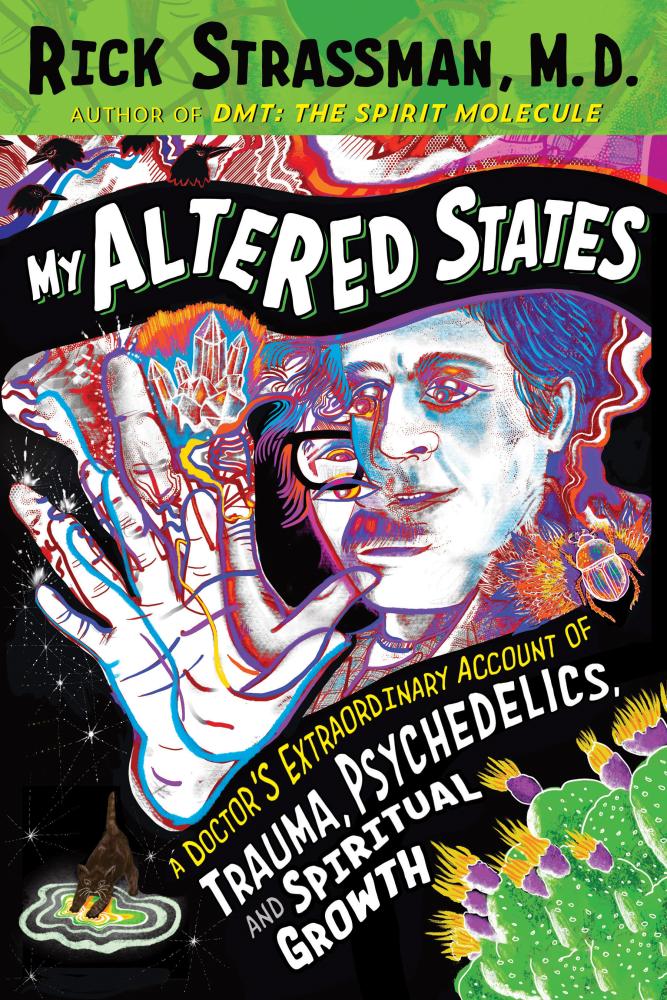
My Altered States is an illustrated memoir showing how important experiences of altered states of consciousness may become in one’s life. In this case, that life is mine, from birth to age twenty-two.
One set of reliably inducible altered states occurs after taking certain drugs. In this book, I include narratives describing the effects of several of these psychoactive substances, specifically LSD, cannabis, and alcohol. However, other episodes of highly-altered consciousness did not result from taking any mind-altering substances. Among the narratives of these non-drug altered states are those resulting from physical and psychological abuse, meditation, psychoanalytic transference, and a prolonged severe mood disorder.
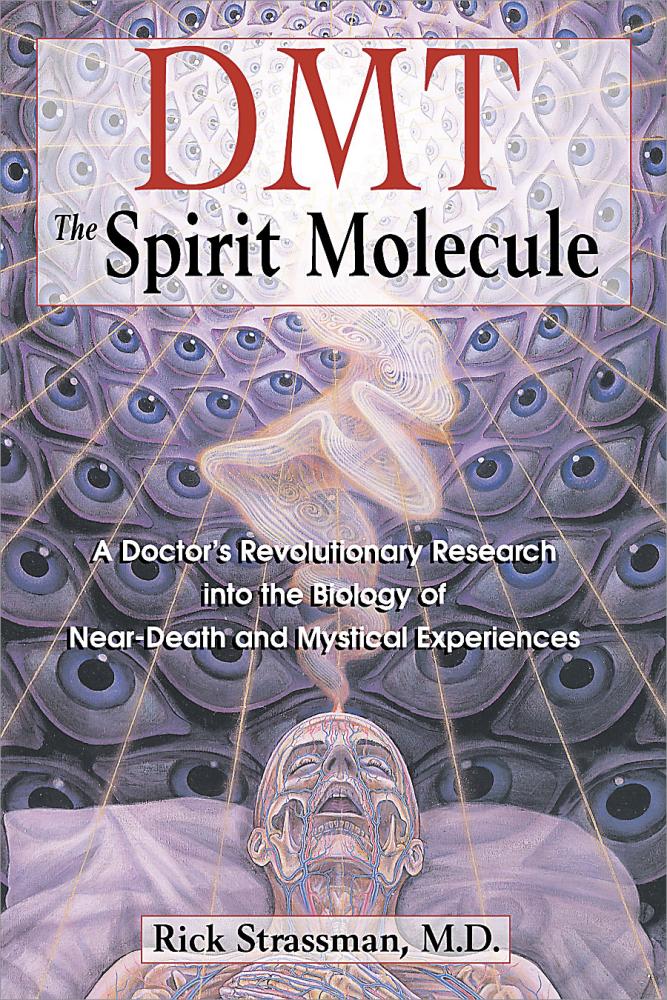
Psychedelic drugs are once again of major interest to the larger public, and my own accounts of their effects are some of the most interesting in My Altered States. My fascination with these drugs and their effects early in life ultimately led me to study them in the early 1990s in a project that marked a renewed interest of clinical psychedelic drug research in the United States. The current interest in psychedelics focuses on their medical uses and, to a lesser extent, their spiritual benefits. Less attention is paid to the actual experiences themselves, and that tends to be excerpts supporting or refuting specific beliefs about psychedelics’ nature and effects. Therefore, a full accounting of such experiences is especially useful because it is amenable to analysis through a variety of spiritual, psychological, or biological models instead of being used to support or refute one’s pre-existing beliefs.
A fully-developed psychedelic drug experience is noteworthy because it possesses certain features not produced by other mind-altering substances. One distinctive property is how real the experience feels—it is more real than everyday reality. This is the case whether one’s eyes are closed, flying through a fractal world of light, or open, observing how that level of reality interacts with ours. The meaningfulness of such an experience—its convincing quality and truth value—is a constant.
Another distinctive feature of the psychedelic drug state is its dependence on the person having the experience, as well as the environment in which it occurs. These have a dynamic relationship with the altered state producing an interaction that may profoundly change the state itself. That is, our reaction to the experience affects its contents. Feeling happy might produce one set of visions, while feeling sad may lead to another.
This dynamic between the state and who and where we are at any particular time in our lives is addressed by the concepts of “set and setting.” Set is who we are—physically, psychologically, and spiritually. Setting consists of the physical and interpersonal environment in which the altered state takes place.
In My Altered States, I end each chapter with a discussion of the importance of set and setting in determining the content and outcome of each experience. This helps us better understand, as well as get the most from, such experiences, while at the same time minimize problems.
While psychedelic drug effects are well-known to depend on set and setting, nonpsychedelic drugs have fewer complex effects, and therefore affect fewer mental functions.
My encounters with alcohol differed from those with psychedelic drugs. It produced an uninhibited state, brimming with a confidence, that ended in emotional and physical distress. On the other hand, my first cannabis experience was fully psychedelic, something we see more often with the availability of increasingly potent strains of the drug.
Most of us have an altered state of choice; in my case, it was the psychedelic one. I loved the feelings of freedom, possibility, significance, and portent. I discovered a new relationship with my body, including losing full awareness of it. I experienced a vastly expanded emotional repertoire—abject ancestral grief, a glimpse of the enlightened state, and losing my fear of insects. Aesthetically, it was an entirely new world. I saw sounds, became aware of the empty aural space that sounds occupied, discovered the relationship between musical performers and the sounds they made, and heard the laws of nature that underlie the production of sound.
At the same time, psychedelic drugs may produce negative effects that are just as intensely true and meaningful. In this book, I recount an episode of LSD-catalyzed homosexual panic, as well as one in which I was fully convinced that I had become permanently insane.
Finally, most mood disorders—depression and bipolar—produce altered states of consciousness to a greater or lesser degree. In this work, I recount altered states occurring during a prolonged episode of an affective disorder in which elevated and depressed moods alternated or combined with each other. The influence of set and setting in this case is also clear. I was highly productive during the phase of elevated mood in a structured university setting. However, the lack of a solid, integrated sense of self (something lacking in my set) limited my ability to withstand the stresses of medical school and life in New York City. Those changes in setting, and how they taxed my set, prompted a rapid conversion from hypomania to depression in this unfamiliar and unsupportive environment.
With proper direction and support, altered states with a positive valence clarified and enhanced my motivation toward academic, psychological, and spiritual goals. Without these structural guardrails, however, negative effects were overwhelming. Fortunately, in most cases I had an empathetic and friendly setting, but where unfamiliarity or hostility predominated, adverse effects held sway. The role of my best friend in talking me down from a psychotic LSD experience is an example of how to quickly and effectively deal with adverse effects when they occur.
Whatever the cause, altered states of consciousness have played a seminal role in my life. They have helped as well as harmed. They have been a reliable touchstone, providing access to feelings, physical sensations, and ideas otherwise inaccessible to normal, everyday consciousness. I hope the emphasis I place on how set and setting determine the meaning and the message of any altered state experience will help us better understand their effects, integrate those effects, prevent problems from occurring, and, treat if they arise.
Rick Strassman, M.D., is adjunct associate professor of psychiatry at the University of New Mexico School of Medicine. From 1990 to 1995 he performed the first new human research with psychedelic drugs in the United States in more than 20 years, studying the powerful naturally occurring compound DMT as well as psilocybin. The author of several books, including DMT: The Spirit Molecule, he lives in Albuquerque, New Mexico. https://www.rickstrassman.com/
 |
 |
 |
Recommended Reading:
VA Funds Ivy League Research into MDMA as Treatment for Post-Traumatic Stress, Alcohol Abuse
Ancient Egyptians Got High to Seek Transcendence Through Altered States of Consciousness, Archaeologists Say
When a Modern Psychedelic Meets an Ancient Ritual of Grief
Recommended Watching:
Joe Rogan Experience #2241 - Rick Strassman
Joe Rogan Experience #1854 - Rick Strassman
 Inner Traditions
  Bear & Company
  Findhorn Press
  Earthdancer Books
  Park Street Press
  Healing Arts Press
  Destiny Books
  Sacred Planet Books
  Bear Cub Books
  Inner Traditions en Español